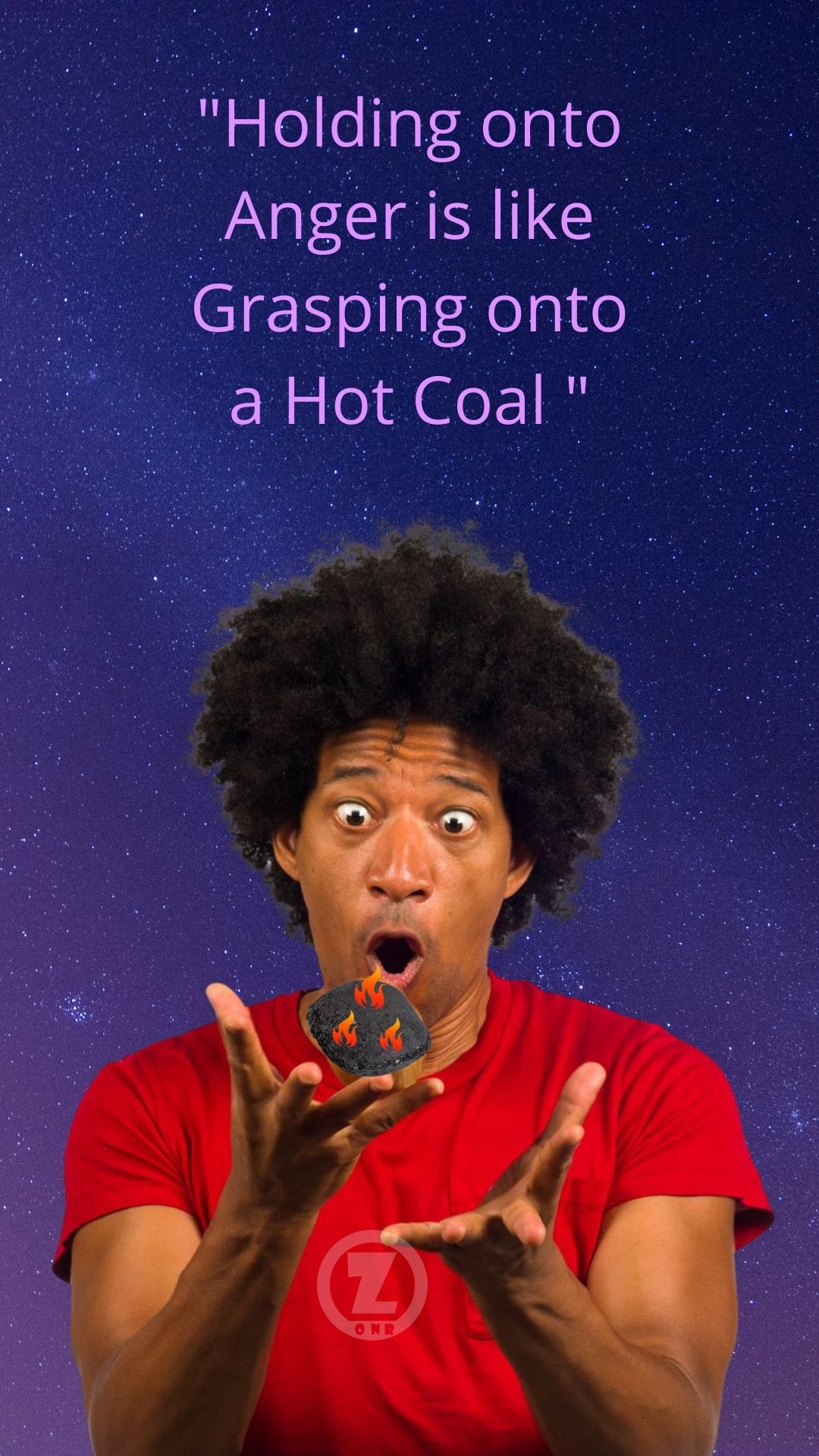
“Holding onto
anger is like grasp-
ing onto a hot coal
with the intent of throw-
ing it at someone else.
You are the one who
gets burned.”
– Gautama Buddha (563-483 B.C.) Hindu Prince and founder of Buddhism
~~~
Sign up to get Zonr for Today’s Full SFZ
While reflecting on your own fourth step discoveries, what triggers your temper to rise, lately?
OR
Have you ever stayed mad at someone and realized it only hurt you?
~~~
Releasing-Anger: A Brahma Guided Meditation (4:00)
Analysis: The Fire Within
Anger burns the hand that holds it. The Big Book exposes the roots of our deep resentment. Threatened ambitions and wounded relationships ignite this inner fire. We get burned by our own fierce reactions. Unchecked fury damages our fragile spirits.
Deep introspection reveals our hidden patterns. It Works: How and Why guides this courageous inventory. We examine our exact part in every conflict. Gautama Buddha warned against clutching hot coals of rage. Buddha taught that hatred hurts only the bearer (Buddha, n.d.). A Higher Power grants grace to release this pain.
Wellbriety teachings echo this vital message of release. “We must let go of anger to find peace” (White Bison, 2002, p. 88). Thich Nhat Hanh similarly championed mindful compassion (Hanh, 1991). He believed inner calm extinguishes burning resentment. Forgiving others heals our own wounded hearts. Freedom arrives when we drop the heavy coals.
References
Buddha. (n.d.). The Dhammapada (F. Max Müller, Trans.). Oxford University Press. (Original work published c. 3rd-4th century BCE).
Hanh, T. N. (1991). Peace Is Every Step: The Path of Mindfulness in Everyday Life. Bantam Books.
White Bison. (2002). The Red Road to Wellbriety. White Bison, Inc.
Traducción al Español
Citas, Títulos y Referencias
“GUARDAR RENCOR ES COMO AGARRAR UN CARBÓN ARDIENTE…” – PASO 4
¿TE SIENTES MENOSPRECIADO? –
“Nos preguntamos por qué estábamos enojados. En la mayor parte de los casos se descubrió que nuestra autoestima, nuestros bolsillos, nuestras ambiciones, nuestras relaciones personales (incluyendo el sexo) estaban heridas o amenazadas. Así que estábamos adoloridos. Estábamos ‘quemados’.” (El Libro Grande, p. 26)
SOLO UNA HERIDA LEVE –
“Examinamos no solo las circunstancias que rodean estos resentimientos, sino que miramos la parte que desempeñamos en ellos. ¿Qué había en nosotros tan amenazado que experimentamos un tormento emocional tan profundo? A menudo, veremos que las mismas áreas de nuestras vidas se vieron afectadas una y otra vez.” (Funciona: Cómo y Por Qué, p. 30)
BUDA –
“Guardar rencor es como agarrar un carbón ardiente con la intención de tirárselo a otra persona. Tú eres el que se quema.”
— Gautama Buddha (563-483 a. C.)
Análisis
La ira quema la mano que la sostiene. El Libro Grande expone las raíces de nuestro profundo resentimiento. Las ambiciones amenazadas y las relaciones heridas encienden este fuego interior. Nos quemamos con nuestras propias reacciones feroces. La furia descontrolada daña nuestros espíritus frágiles.
La introspección profunda revela nuestros patrones ocultos. Funciona: Cómo y Por Qué guía este inventario valiente. Examinamos nuestra parte exacta en cada conflicto. Gautama Buddha advirtió contra aferrarse a carbones ardientes de rabia. Buda enseñó que el odio solo lastima al portador (Buddha, n.d.). Un Poder Superior concede gracia para liberar este dolor.
Las enseñanzas de Wellbriety hacen eco de este mensaje vital de liberación. “Debemos dejar ir la ira para encontrar la paz” (White Bison, 2002, p. 88). Thich Nhat Hanh también defendió la compasión consciente (Hanh, 1991). Él creía que la calma interior extingue el resentimiento ardiente. Perdonar a los demás sana nuestros propios corazones heridos. La libertad llega cuando soltamos los carbones pesados.
Pregunta Concluyente
¿Alguna vez te has enojado con alguien y te has dado cuenta de que solo te lastimaba a ti?
Mobile Recovery Solutions You Can Count ON!



Leave a Reply